Monthly Archives: November 2010

Heavenly Broiled Scallops

Another Fresh Seafood Idea

(Printer-friendly version)

Scallops—and their shells—are prominent symbols in literature as far back as Greek and Roman mythology. The apostle St. James wore the scallop shell as his emblem.

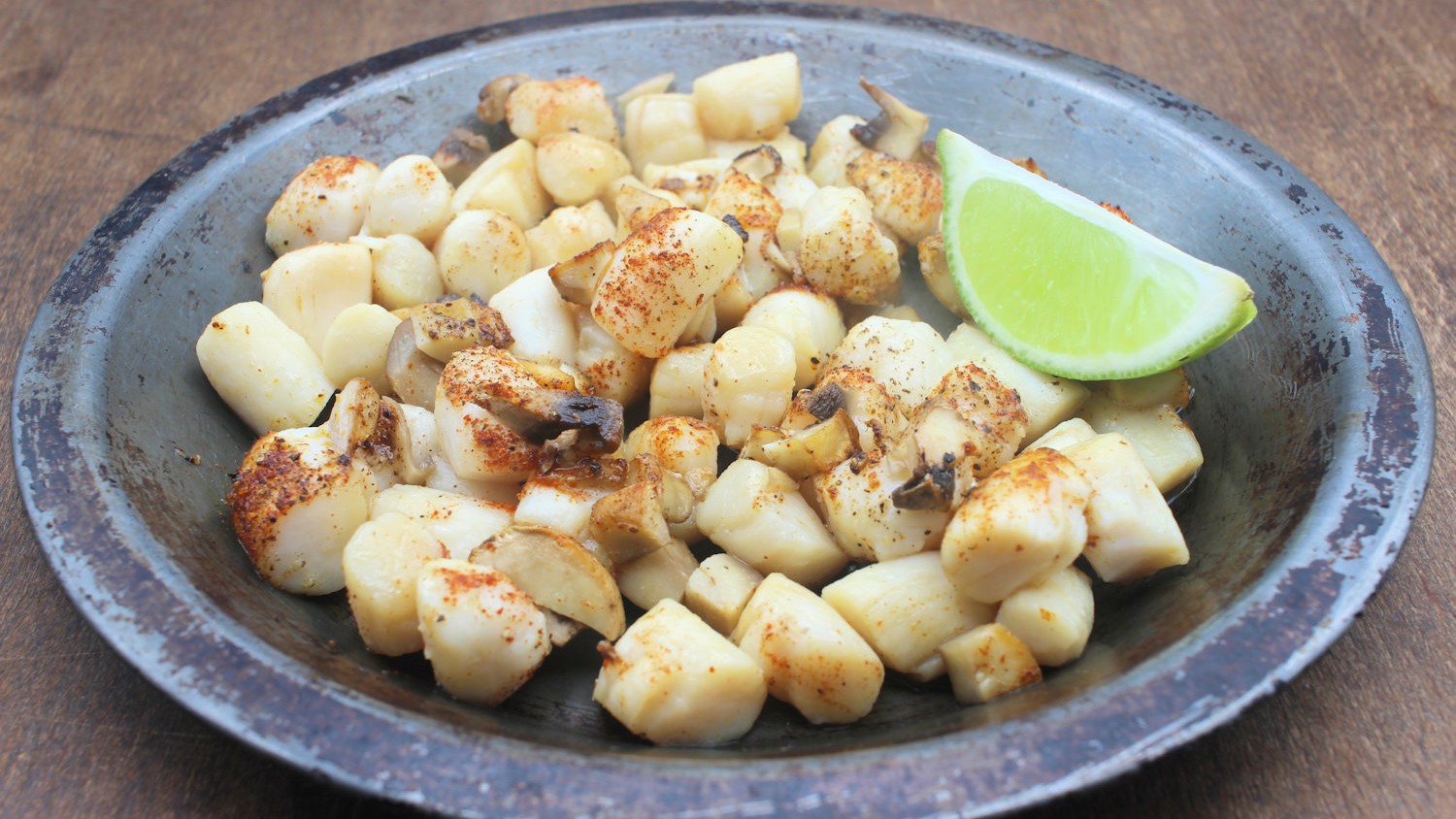
We have two species of scallops available to us—bay scallop and sea scallop. The bay scallop grows up to four inches wide and is found in bays and estuaries from New England through North Carolina. The edible meat is the adductor muscle, which is about one-half to three-fourths inch in size.

Growing twice as large, the sea scallop comes from the deep waters of the North and Mid-Atlantic. Its meat is one to two inches wide.

The bay scallop tastes best—its sweet, mild flavor is the gourmet’s favorite. The meat of scallops is creamy white, tan or creamy pink.

Fresh scallops have a sweet smell. Though they have a stronger odor than most seafood when the container is opened, it dissipates quickly. There should not be any iodine, sulfur or ammonia odor. Fresh scallops have an ivory translucence, firm texture and elastic springiness. There should be no excess liquid. They are not soft and droopy and they don’t settle into each other.

Scallops are nutritious. They provide a good source of protein and are low in fat, calories and cholesterol.

They are delicate and require short cooking times. When overcooked, they shrink and toughen. The same thing happens if they are left for any time after being cooked. They need to be served and eaten immediately.

Scallops can be broiled, baked, sautéed, fried, poached, stewed, grilled, stir-fried, used in casseroles or in combination with other seafoods.

  • 1 pound bay scallops (or sea scallops, quartered)
  • ¼ teaspoon pressed garlic
  • ¼ teaspoon salt
  • 2 tablespoons minced fresh parsley
  • 1 tablespoon vegetable oil
  • ¼ cup dry vermouth
  • ½ cup soft bread crumbs combined with 1 teaspoon melted butter or margarine
  • paprika

In medium bowl, combine garlic, salt, parsley, oil and vermouth. Stir in scallops.

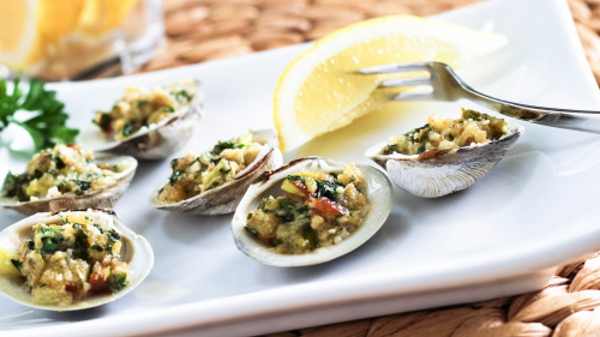
Spoon mixture into 4 shells or ramekins. Place on baking sheet. Broil about 4 inches from heat for 5 minutes. Sprinkle crumb mixture and paprika on top and broil until lightly browned, about 3 to 4 minutes. Serves 4.

Contributed by Joyce Taylor

Atlantic Sea and Bay Scallops

NORTH CAROLINA FISHERIES

(Printer-friendly version)

Sea scallops are found in the Northwest Atlantic Ocean from Newfoundland, Canada to Cape Hatteras, North Carolina.  Sea scallops are very prolific.  A single scallop can generate up to 270 million eggs during its lifetime and live up to 20 years. 

Sea scallops spawn in late summer to fall, and larvae grow rapidly.  Between ages three and five years, sea scallops grow to 50 to 80 percent of their shell height and may quadruple their meat weight.  They can reach a maximum size of 6.7 inches in height.  Juvenile and adults sea scallops are a food source for cod, flounder, crabs, lobsters and sea stars.

Currently the Atlantic sea scallop resource is healthy and sustainable.  This fishery is extremely important to our country’s economy and is the largest wild scallop fishery in the world.  In 2009, U.S. fishermen harvested 58 million pounds of sea scallop meats worth over $382 million. North Carolina watermen participating in this fishery in 2009 harvested 382 thousand pounds of meat having a market value of over $2.3 million to commercial fishermen.

The New England Fishery Management Council manages the sea scallop resource in cooperation with the Mid-Atlantic Fishery Management Council.

Atlantic sea and bay scallops are filter feeders, meaning they strain plankton and other food particles from water by passing it over a specialized structure that traps food.  Cilia move the food toward the mouth and into the digestive tract.

Bay scallops live up to 26 months and grow up to four inches.  Early in life, larvae attach to the leaves and stems of sea grass. As they mature, scallops sink to the bottom and continue to grow. Environmental factors such as temperature, rainfall, and sea grass health play a critical part in scallop abundance and yearly landings can vary a great deal.

According to the North Carolina Division of Marine Fisheries, the status of the North Carolina bay scallop fishery is “recovering.”  The resource was compromised by a red tide in 1987 and several hurricanes in the 1990s.  Sampling in areas south of Bogue Sound in 2009 showed stock improvements in some areas.  Environmental disturbances and predation by cownose rays may still limit the spawning stocks in the central coastal region.

Contributed by Barry Nash