Category Archives: North Carolina Fisheries

Time to Clam Up

north carolina fisheries

(printer-friendly version)

Available year-round, the native hard clam, or quahog, has always been a coastal favorite. Its scientific name, Mercenaria mercenaria, comes from the Latin word for “wages.” Native Americans once used quahog shells to make beads that were used as wampum, or money.

Today clams may be bought in the shell or shucked. Those in the shell should be heavy and tightly closed, or should close when tapped lightly. They should have a pleasant, briny odor. Discard any with open or broken shells.

Clam meat is translucent. Its color ranges from ivory to golden brown. The liquid should be clear or slightly opaque.

Markets classify hard clams by size. The smallest, under 2 inches, is called the littleneck, after Little Neck Bay on Long Island, where they were once plentiful. Cherrystones are 2 to 3 inches and are named after Cherrystone Creek in Virginia. Topnecks are 3 to 3 ½ inches. Any quahog larger than 3 ½ inches is called a chowder clam.

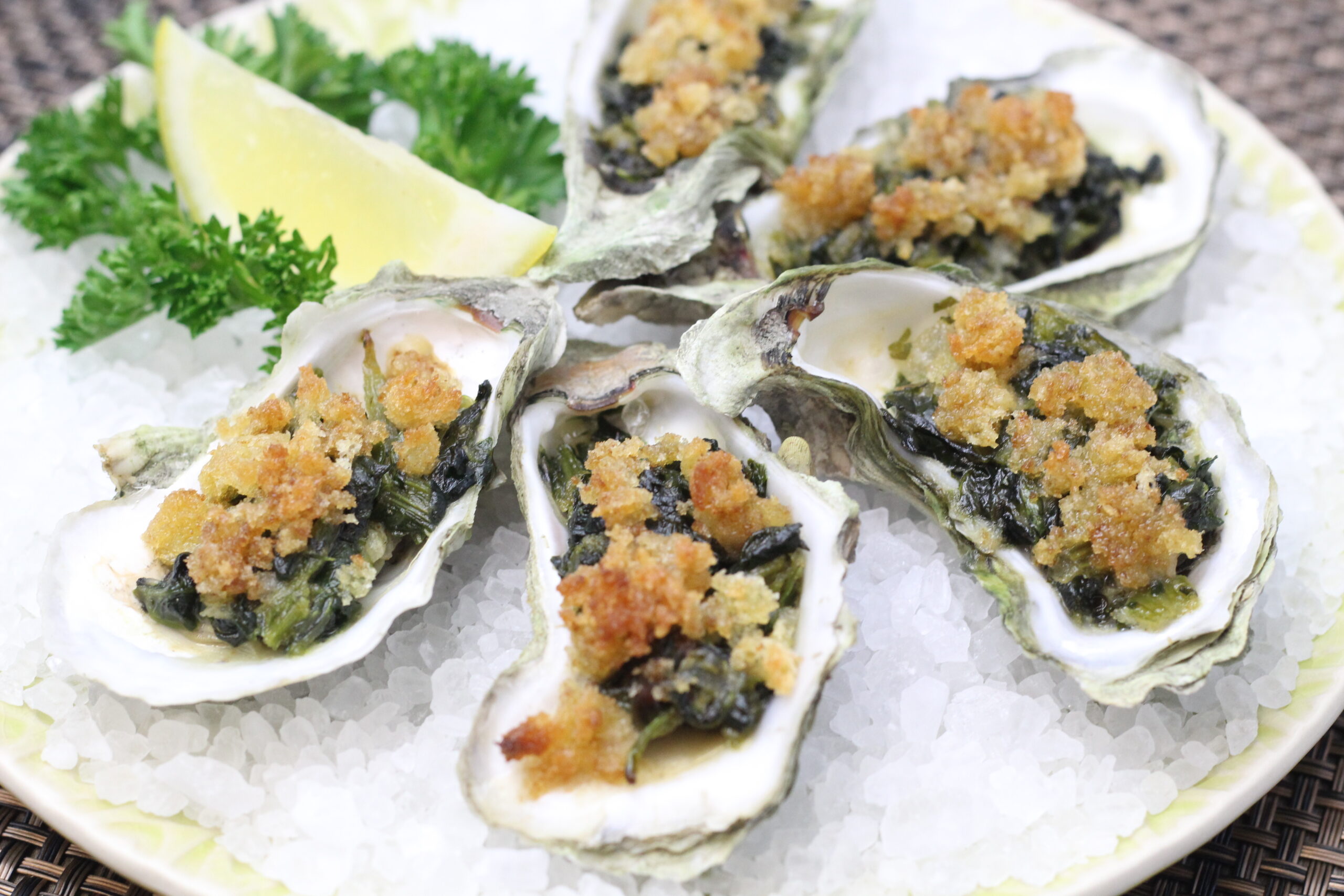
The smaller clams, littlenecks and small cherrystones, are firm but tender with a mild flavor. They can be steamed, broiled, baked, grilled, used in clambakes or other cooked dishes, or on the half-shell. Large clams are less tender, so it’s best to chop them for chowders, fritters or stuffed clams. In addition to their great taste and versatility, clams are low in calories, fat and cholesterol.

If you enjoy steamed clams, oysters and mussels, you may want to buy a shellfish steamer. It’s a large two-section pot (much like a double boiler). The bottom part holds water. The top part is much bigger, usually more than twice the height of the bottom pot. It has holes in the bottom that allow steam to rise and surround the shellfish. You can buy an inexpensive, enamel one at specialty shops, large general merchandise stores and many hardware stores.

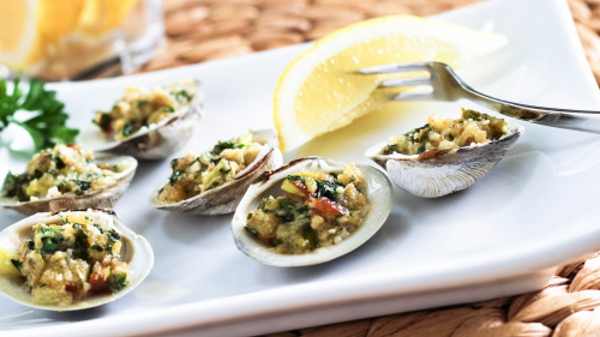
Many of you will buy your clams already shucked. For recipes calling for cooking clams in the shell, you can buy imitation shells at many specialty or kitchen stores. You can also use individual ramekins, dividing the clams into serving portions, but the effect is not the same. If you do this, increase the cooking time as necessary.

Remember to cook clams only until tender. Overcooking toughens them. Also, watch the amount of salt you add to clam dishes. Many clams taste salty naturally, and any additional salt will be too much.

Adapted from Mariner’s Menu: 30 Years of Fresh Seafood Ideas

Contributed by Joyce Taylor

The Biology of Bluefish

North Carolina Fisheries

Bluefish

Credit: Duane Raver

(printer-friendly version)

Bluefish are characterized by a blue-green back with silvery sides and belly, a pointed snout and sharp, compressed teeth. They are found along the U.S. Atlantic coast from Maine to Florida. Bluefish are aggressive predators and feed on squid and fish, especially menhaden.

Bluefish can live as long as 12 years, reach up to 39 inches in length and weigh as much as 21 pounds. They migrate seasonally according to changes in water temperature. During winter, large bluefish tend to remain in the mid-Atlantic region and then move south to North Carolina around March. Small bluefish will move farther south during winter. As water temperatures rise, they will migrate northward.

Bluefish are important to both recreational and commercial fishermen. Approximately 60 percent of bluefish are caught with hook and line, which has relatively low bycatch rates. This species is managed by the Mid-Atlantic Fishery Management Council and the Atlantic States Marine Fisheries Commission. In the Atlantic Ocean, bluefish populations are high and overfishing is not occurring.

For more information on bluefish, go to: http://www.nmfs.noaa.gov/fishwatch/species/bluefish.htm.

Contributed by Barry Nash